

Beyond implementation, we provide the local expertise and certified technical support your business needs to scale. From Saudi VAT compliance to custom workflows, we make ERPNext work for you.
Beveren Software delivers ERPNext implementation, consulting, customization, integration, and support for businesses across Riyadh and the wider Kingdom of Saudi Arabia. We help Riyadh companies streamline operations, manage financial processes, and stay compliant with local requirements such as ZATCA e-invoicing.
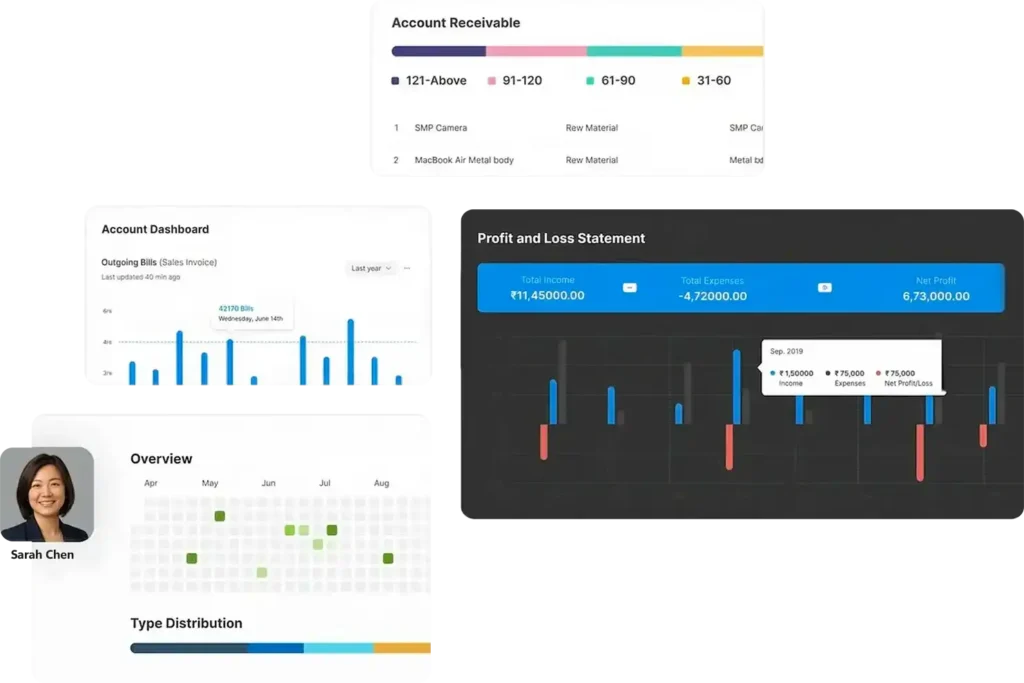
ERPNext Riyadh integrates all your core business processes into a single, unified system — no more siloed tools or broken workflows.
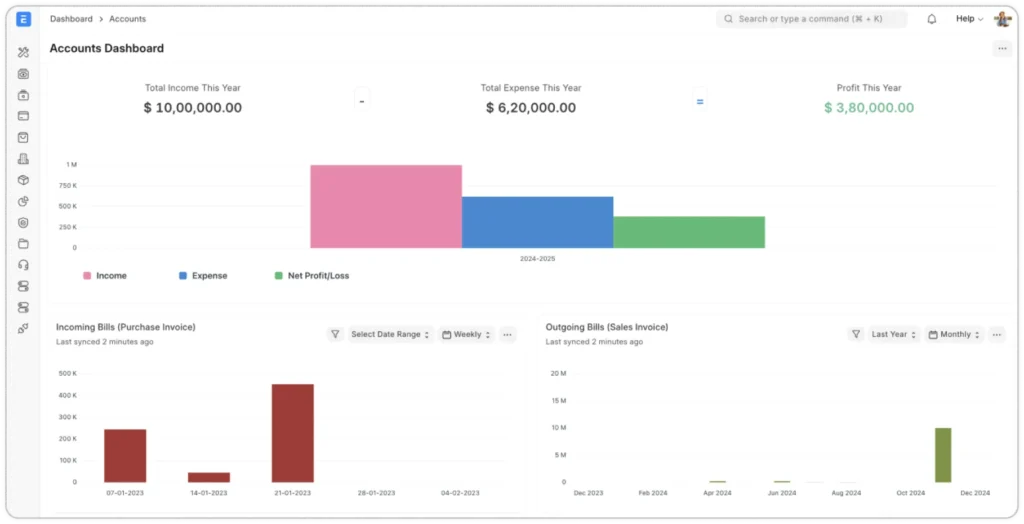
Full double-entry accounting with automated journal entries, bank reconciliation, and real-time financial reporting across multiple entities and currencies.
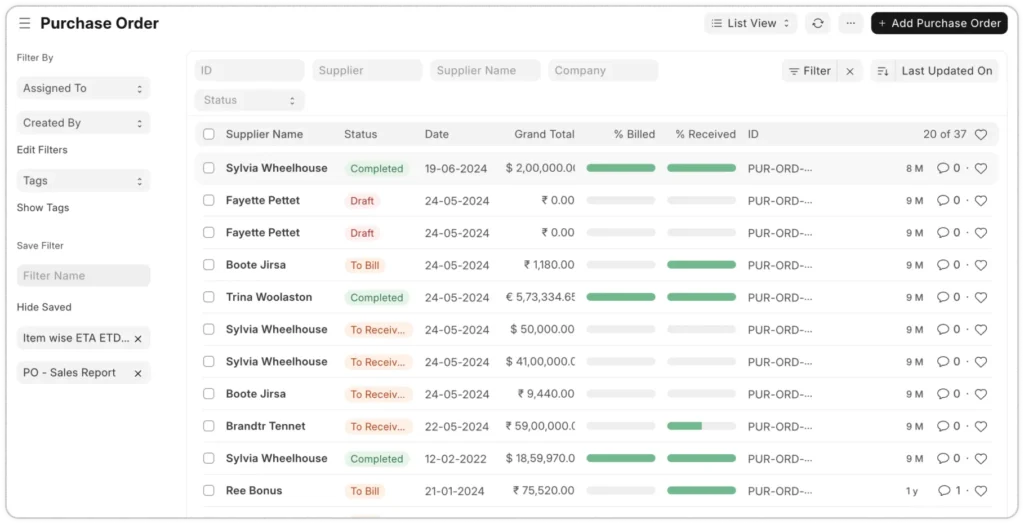
Streamline your entire procurement process from requisition to payment with automated workflows, vendor management, and cost tracking.
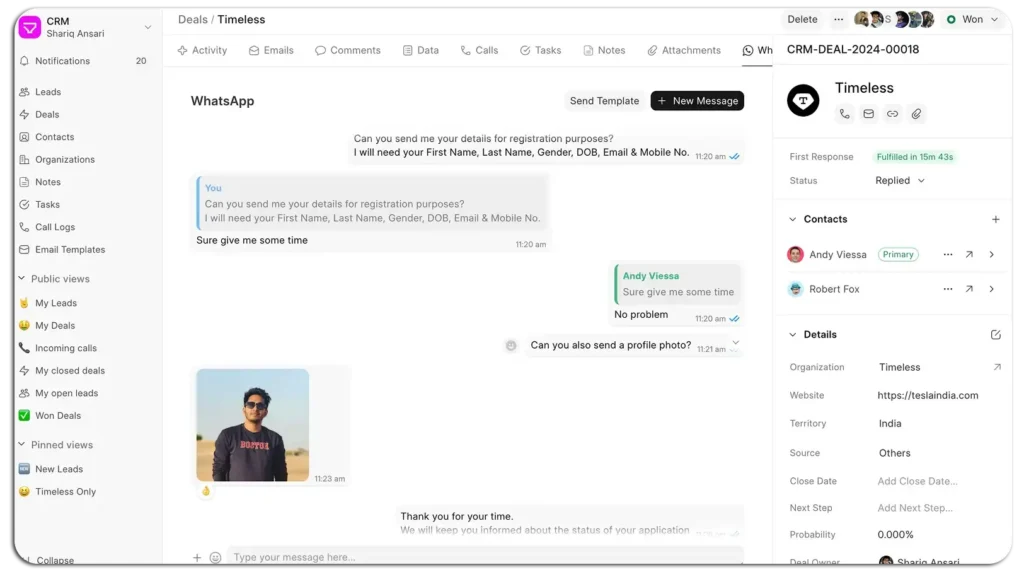
Real-time inventory tracking across warehouses with serial numbers, batch tracking, automatic reordering, and perpetual inventory valuation.
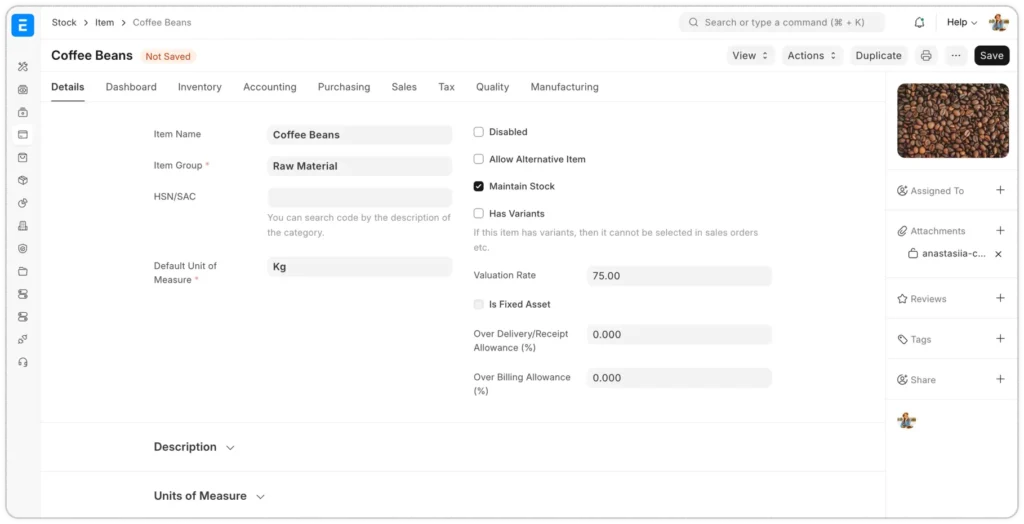
Plan and execute production with multi-level BOMs, capacity planning, work order tracking, and integrated quality management.
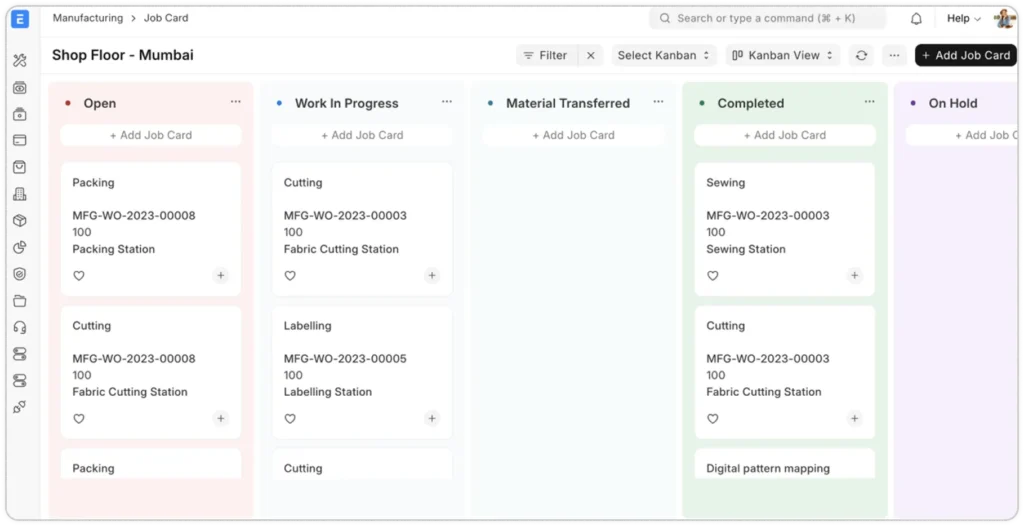
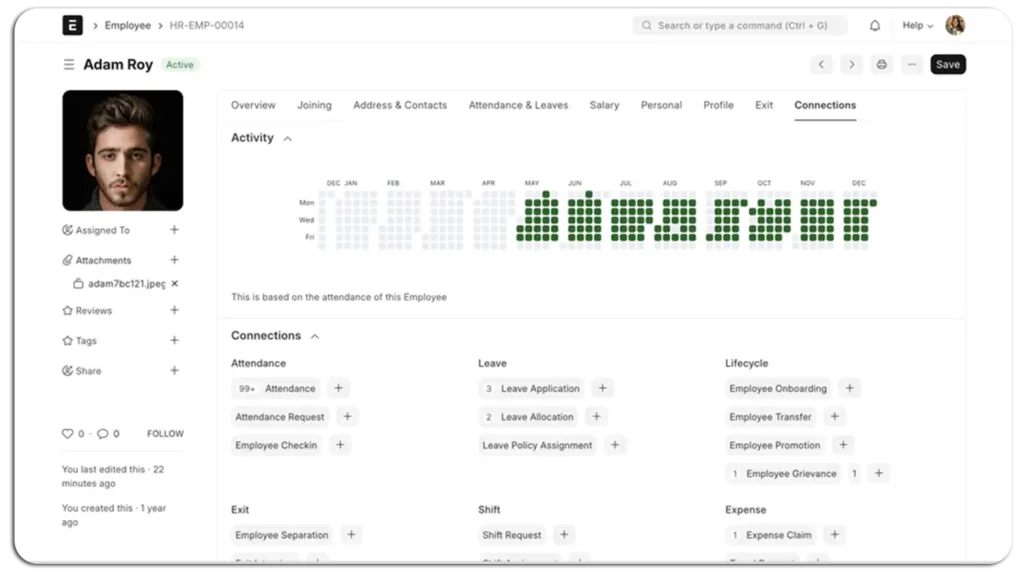
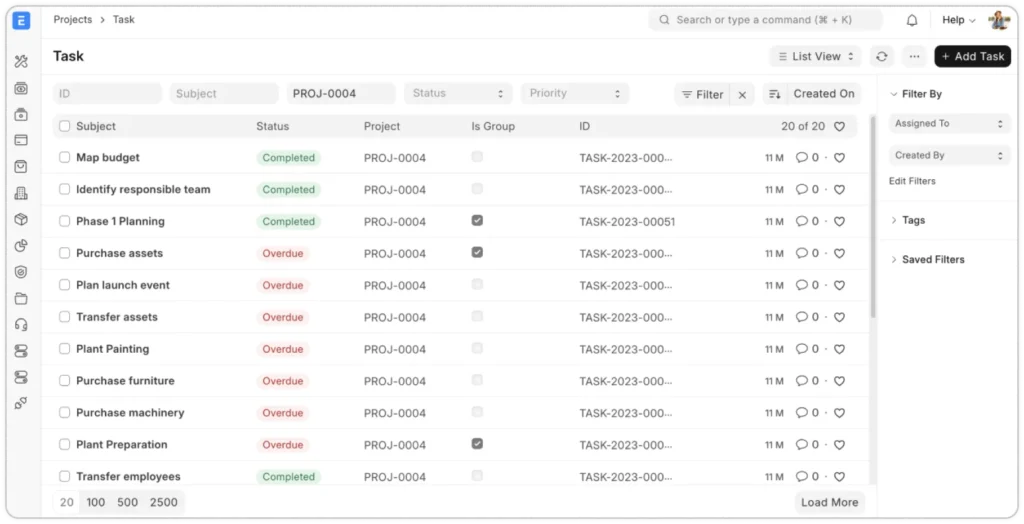
Manage projects end-to-end with task tracking, timesheets, expense management, and real-time profitability analysis.
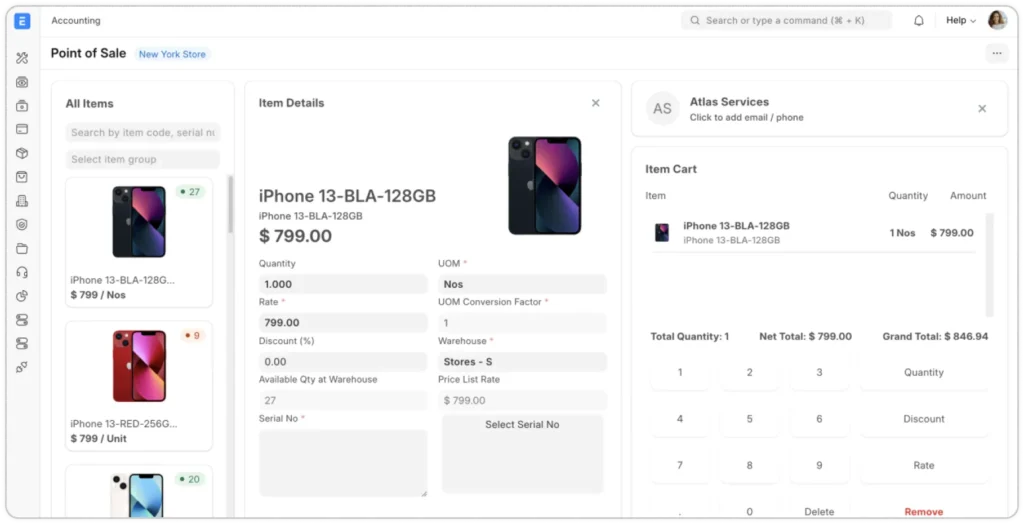
Modern, cloud-based point of sale that works online and offline. Manage multiple stores, shifts, and payment methods effortlessly.
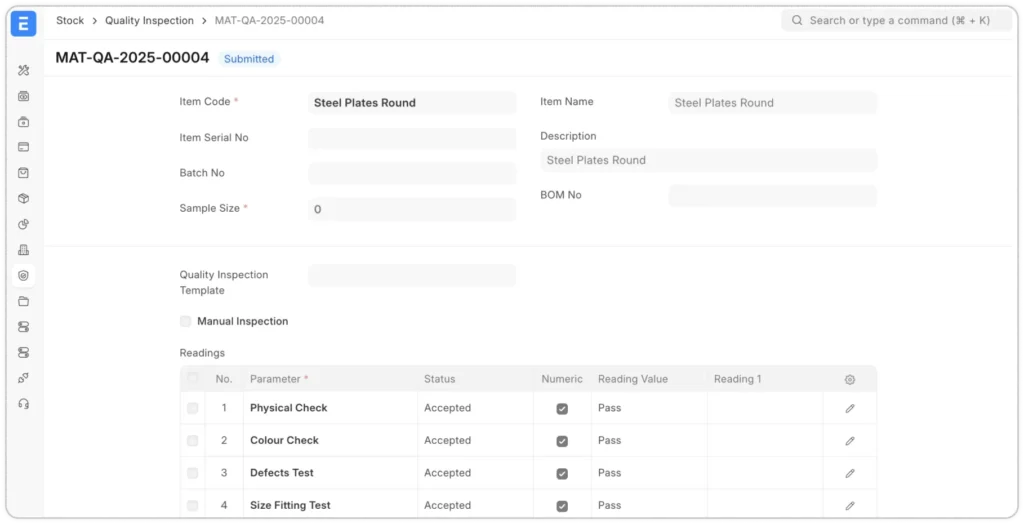
Ensure product quality across your supply chain with inspection templates, non-conformance tracking, and analytics-driven quality management.
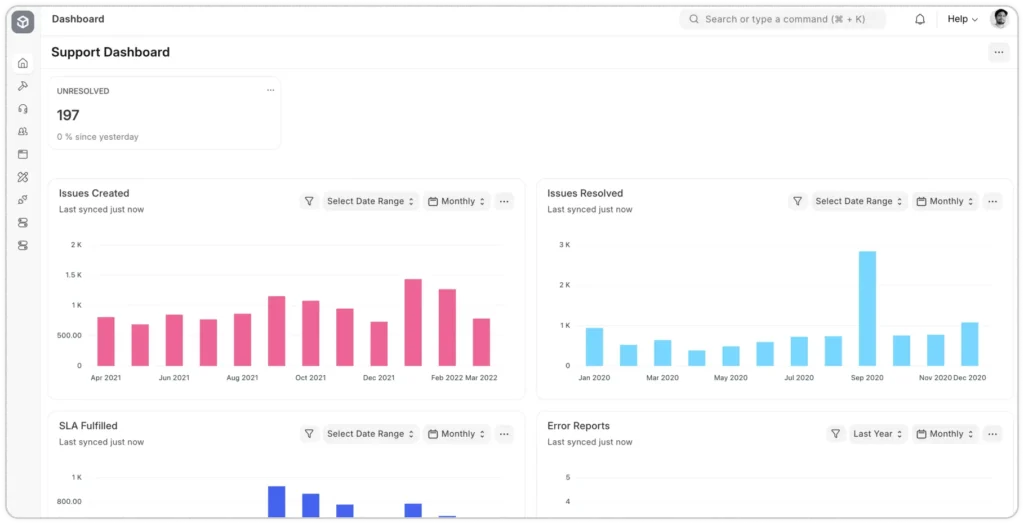
Deliver exceptional customer support with automated ticket routing, SLA tracking, self-service portals, and a built-in knowledge base.
Full double-entry accounting with automated journal entries, bank reconciliation, and real-time financial reporting across multiple entities and currencies.
Streamline your entire procurement process from requisition to payment with automated workflows, vendor management, and cost tracking.
Real-time inventory tracking across warehouses with serial numbers, batch tracking, automatic reordering, and perpetual inventory valuation.
Plan and execute production with multi-level BOMs, capacity planning, work order tracking, and integrated quality management.
Manage projects end-to-end with task tracking, timesheets, expense management, and real-time profitability analysis.
Modern, cloud-based point of sale that works online and offline. Manage multiple stores, shifts, and payment methods effortlessly.
Ensure product quality across your supply chain with inspection templates, non-conformance tracking, and analytics-driven quality management.
Deliver exceptional customer support with automated ticket routing, SLA tracking, self-service portals, and a built-in knowledge base.
Proprietary ERPs are expensive, limiting, and rigid. Businesses are left with two choices — spend through the roof on SAP, Oracle, NetSuite, or use multiple disconnected apps leading to manual work, poor visibility, and broken traceability.
Beveren Software is a Frappe-certified ERPNext partner headquartered in Riyadh, Saudi Arabia, offering implementation, customization, and support services for businesses across Dammam, Khobar, and the Eastern Province. No features hidden behind paywalls. Everything is yours to use, modify, and extend — giving you full freedom, control, and flexibility.
ERPNext comes packed with powerful capabilities that let you customize, extend, and scale your operations without limits.
Build custom forms, reports, and automations without writing code
Manage all modules from any device, anywhere
Customizable multi-level approval chains across all documents
Granular field-level access control to safeguard your data
RESTful APIs for seamless third-party integrations
Manage multiple entities within a group company structure
Accounting and reporting across multiple currencies
Build, download, and share standard or custom reports
Version-controlled, centralized document repository
Open-source with zero license fees — pay only for hosting
ERPNext offers industry specific software solutions tailored for diverse industries, aimed at streamlining operations and maximizing efficiency.
Optimize production planning and shop floor operations. Seamlessly integrate customer management, inventory, and financial reporting into a single platform for real-time coordination across your entire manufacturing vertical, ensuring maximum efficiency from raw material to finished product.
Master your supply chain with ease. Track inventory, serial numbers, and batches across multiple locations and warehouses while simplifying billing, procurement, and logistics. Our solution ensures your distribution network runs at peak efficiency with automated stock replenishment.
Streamline project management and financial tracking. Tailored for consultancies and service providers, our solution manages complex billing, automated bookkeeping, and resource allocation to keep your projects profitable, your team organized, and your clients satisfied.
Elevate patient care and clinical operations. Enhance resource allocation, manage patient records securely, and ensure strict regulatory compliance. Our ERP solution is designed to improve healthcare delivery and operational efficiency, allowing your staff to focus on what matters most.
Revolutionize your sales reach. Optimize retail operations with real-time inventory and CRM, while empowering your field team with specialized VAN Sales tools for on-the-go billing, stock tracking, and customer management, resulting in improved performance and satisfaction.
Take control of complex project lifecycles. Manage engineering, procurement, and construction with dedicated tools for budget tracking, material price fluctuations, and regulatory compliance. Stay on schedule and under budget, even when environmental or logistical variables change.

Join over 30,000+ companies that have successfully streamlined their operations and scaled their business using our platform.
Can’t find the answer you’re looking for? Send us an email and our team will get back to you as soon as possible.
Beveren Software is a Frappe-certified ERPNext partner serving businesses throughout Riyadh. As an official Frappe partner, we’re authorized to implement, customize, and support ERPNext deployments that meet Saudi regulatory requirements, including ZATCA Phase 2 e-invoicing. We specialize in end-to-end ERPNext rollouts for manufacturing, trading, distribution, healthcare, and professional services companies based in and around Riyadh, with full Arabic and English support for smooth adoption.
ERPNext implementation for Riyadh businesses typically runs SAR 15,000 to SAR 150,000, depending on company size, user count, required modules, and customization depth. Because ERPNext is fully open-source, there are zero software license fees — you’re paying for implementation, customization, training, and hosting. Small Riyadh businesses can get a basic setup running for SAR 15,000–30,000, while larger operations needing ZATCA integration, custom reporting, and complex workflows typically invest SAR 50,000–150,000. We offer transparent, fixed-scope packages built around Riyadh business requirements.
Most Riyadh implementations take 4 to 16 weeks depending on complexity, module count, and data migration needs. A standard rollout covering accounting, procurement, sales, and inventory for an SME can go live in 4–6 weeks. Larger companies needing ZATCA Phase 2 integration, custom workflows, payroll localization, and multi-branch setup typically need 10–16 weeks. Our process includes discovery, configuration, user testing, training, and go-live support to keep things on schedule.
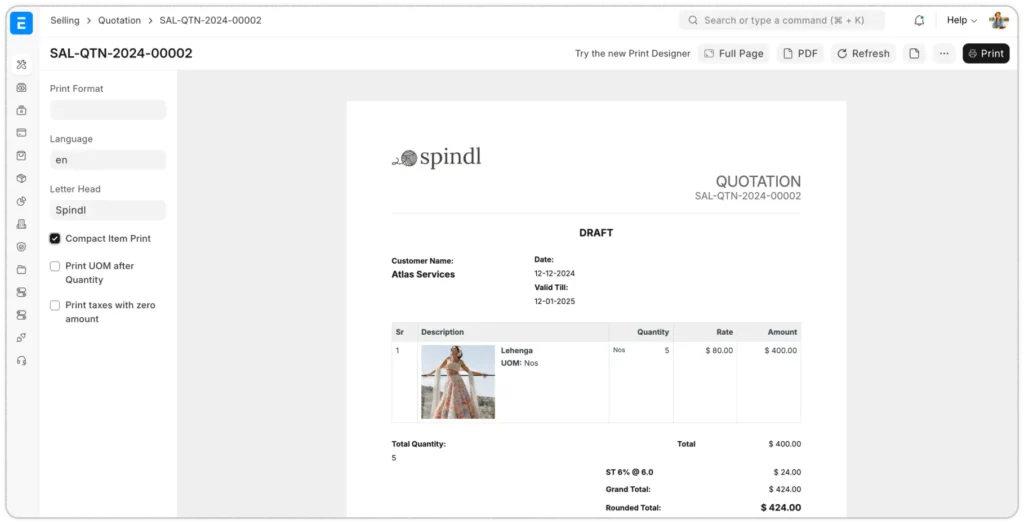
ERPNext fully supports Arabic language and right-to-left text natively. Riyadh teams can switch the interface to Arabic, and every printed document — invoices, purchase orders, financial reports — can be generated in Arabic, including bilingual print formats showing Arabic and English on the same template. This extends to the chart of accounts, item descriptions, customer records, and interface labels across all modules.
ERPNext supports the HR and payroll reporting tied to Saudi Arabia’s Nitaqat (Saudization) program. Through Frappe HR, Riyadh businesses can categorize employees by nationality, generate workforce composition reports, and monitor Saudization percentages by department. Combined with ZATCA e-invoicing and Arabic localization, ERPNext helps Riyadh companies align with the Kingdom’s digital transformation requirements under Vision 2030.
Both are used by Riyadh businesses, but they differ sharply on cost and flexibility. SAP Business One charges a per-user license fee (roughly USD 1,500–3,500 per user), while ERPNext carries zero license fees as fully open-source software. ERPNext includes CRM, HR, manufacturing, and helpdesk out of the box at no extra cost, where SAP Business One often needs paid add-ons for equivalent functionality. Both support ZATCA e-invoicing, but ERPNext’s open architecture means faster, cheaper customization — which is why it tends to suit Riyadh SMEs and growing companies better, while SAP Business One is more common among larger firms already inside the SAP ecosystem.
Yes. Frappe HR supports GOSI contributions, end-of-service benefit calculations under Saudi Labor Law Article 84, and Saudi labor-compliant leave management. Employer and employee GOSI deductions are fully configurable, salary components run in SAR, and the system supports Hijri date integration and WPS file generation for Ministry of Human Resources compliance. We configure this Saudi payroll localization as a standard part of every Riyadh deployment.
Riyadh companies across trading and distribution, manufacturing, professional services, healthcare, retail, and construction/EPC run on ERPNext. Trading and distribution firms in Riyadh use it to manage inventory, procurement, and multi-warehouse operations; professional services firms use it for project billing and resource tracking; healthcare providers and retail chains use it for patient/customer management, POS, and financial reporting. ERPNext’s modular design adapts to virtually any Riyadh-based business.
Yes. ERPNext natively supports multi-branch and multi-subsidiary structures. A Riyadh head office can run as the parent entity with consolidated financial reporting at the group level, while branches in Jeddah, Dammam, or Khobar keep independent inventory, sales, and HR data. Role-based access controls limit visibility to the relevant branch, so a Riyadh company can manage every location from a single ERPNext instance.
Yes. We provide post-implementation support for Riyadh clients covering bug fixes, system updates, user training, and feature enhancements, available in Arabic and English. Support plans include response-time SLAs, periodic system health checks, and priority access to upgrades and security patches — plus assistance with ZATCA e-invoicing compliance updates as ZATCA releases new requirements. Long-term managed-service contracts are available for Riyadh businesses that want a dedicated ERPNext partner on an ongoing basis.
Yes, Beveren Software provides ERPNext implementation, customization, and support services to businesses in Riyadh. While headquartered in Dammam, the team delivers remote and on-site ERPNext deployments across Riyadh covering accounting, inventory, procurement, manufacturing, and ZATCA e-invoicing compliance. Riyadh-based clients receive the same certified Frappe partner support, Arabic/English assistance, and post-implementation service plans available to businesses across the Eastern Province and the rest of the Kingdom. Companies in Riyadh looking to implement or migrate to ERPNext can schedule a consultation to discuss project scope, timeline, and pricing specific to their operations.
WhatsApp us